How to prepare your boat for cruising in the Sea of Cortez
Updated 21 Aug 2022
Generally speaking, sailing in the sea of cortez, is like sailing anywhere, you'll break about the same amount of things each season as you would back home, there'll be times you wish you had something you don't, and there'll be times where you wish you didn't have something you did.
That said, here's some things I think it's worth paying attention to.
Batteries and Charging
If you want to live on the hook all year round, its worth thinking about your energy needs on board, and asking yourself if you have enough battery capacity, and if those batteries are in good condition.
Marinas, where they exist in Baja are hundreds of miles apart, all the really fun stuff is in between, so you may want to be on the hook for weeks if not months at a time. This typically means you'll be discharging your batteries for longer and deeper than you may have done so just cruising at weekends around your home port.
It's also hot as balls, which means your refrigerator is going to be working over time, you'll be running your anchor light at night, along with your fans, which can place an additional drain you might not always expect on your battery banks.
The heat can also be a big factor in how long batteries survive out here, so if your cells are a decade old, especially if they are lead acid, you might want to think about replacing them, and potentially increasing the capacity if you don't want to be worrying about going flat.
Charging is also important, nobody is going to thank you for running your generator for 4 hours in the anchorage every day just to top off your batteries. The good news is that most days you will have crystal clear blue skies and a nice intense sunlight, so your solar panels will work great.
If you only have a small panel, and plan on running more energy intensive systems, like a fridge, or the inverter to charge your laptop or watch tv, some additional solar, and a good quality MPPT charger can be a sound investment.
Weather in Baja can be fickle, with the wind almost always dead ahead or dead astern this can mean for a lot of motoring, so you might also want to make sure your alternator is able to take advantage of this. We sized our alternator to be able to charge our 1200ah lithium bank in a few hours, which means we rarely have run the engine just to charge the battery.
A small briefcase generator can also be a really good item, its probably cheaper than running your engine, but they can be noisy and a bit awkward to store. You'll also have to carry more gasoline to run them.
Jugs and Filters
There are fuel docks in most marinas, but north of San Carlos/Santa Rosalia fuel docks are few and far between. There is also a 5-15% surcharge on fuel there, and it can be really frugal to grab a jerry jug or two from the local pemex than make a trip into the marina just to refuel.
We carry 3 20 litre fuel jugs which we use for refuelling, when we aren't using them to refuel, we often store additional dinghy fuel in them, or in some cases even diesel, so although they take up a bunch of space, they do come in super handy.
We also carry a 20L water jug, along with a couple of smaller water containers in case we ever need to haul water aboard. We have a watermaker so this is pretty rare, but they do come in super handy at times. If you don't have a calorifier, a water jug left on deck in the sun will give you a super hot shower after a few hours too.
We prefer to make our water, but if we are filling the tanks from the dock, we run it through an RO filter, you can make these up from various fittings or buy them online or from outlets in la paz or elsewhere, they aren't complicated, its just a charcoal and ceramic filter combo which filters out anything nasty before it goes in our tanks.
We have a Baja filter in case we have to take on fuel from an untrustworthy source - these are thankfully few and far between in Baja now, and we've touch wood never had any issues with fuel from any of the gas stations and fuel docks we've visited.
Screens
Thankfully in Baja there aren't that many bugs and bitey things, but when there are, they are unbelievably nasty. The only thing worse than being eaten alive by jejenes, and mosquitos is having to close the hatches to keep them out. A good set of screens, or even just some mosquito nets carefully draped over the hatches or your bed can be a godsend in those few places where bugs are an issue.
Fans
However many fans you think you might need, take more. Take spares too.
We have one fan per person in every cabin, plus one over the nav station, one in the galley, and one over the setees. This means no matter where you are down below you can get a breeze. This is more useful at night once the sun sets and the breeze stops than during the day, but there's nothing worse than drowning in your own sweat when you are trying to drift off.
Water Maker
Water is a lot easier to get than it used to be, marinas in la paz have drinkable water at the dock, as does Puerto Escondido, in other places you can have drinking water delivered for about 15 pesos per 20Litre garafon.
That said, we absolutely love our water maker, we have enough battery capacity we can fill our tank from empty without having to run the engine (at least at the time) and we love the flexibility it gives us. We usually run it for half an hour every day or two, which keeps the tank mostly topped up, and it lets us shower whenever we want. There is an energy cost of course for making water, but for us 'infinite' water is a luxury we absolutely adore when cruising for extended periods.
We generally try to spend as much time at anchor as we can, and it just opens up the time we can go without having to go into town.
Air Conditioner
If living on the hook is not for you, then get yourself an air conditioning unit, we have a plumbed in one, which we like because its out of the way, but for years we just had a window unit on board. That nice sea breeze you enjoyed out in the bay wont be there when you are tucked into the marina, and having the ability to keep the boat at a nice crisp 20C is a luxury that you wont regret.
If you have the battery capacity, or a small generator (like a briefcase one) then you can also run this at anchor, we don't do this very often, but there's been a few times wehere we've come back from a long hike dehydrated with borderline heat stroke and the ability to just cool down in luxury whilst we flop out and watch a movie cannot be understated.
A good set of spares
You know better than I what spares you're going to go through on your boat, but as a general rule, we take every item which we will need for the next six months as part of scheduled maintenance.
That means we have spare RO filters, impellers, pump rebuild kits, that sort of thing ready to go in case one fails prematurely.
We also keep critical spares for our (aging) perkins 4108 engine, we know at some point for example that our starter will fail, so we have a spare one ready to go. Same for fresh and raw water pumps.
If you can't live on the hook without it, think about what is likely to fail, and if it would ruin your trip, pack spares that are likely to fail. If you can live without it, then consider taking either rebuild kits, or the most likely items to give you issue.
Dinghy
Your dinghy is your best friend in the sea of cortez, we zoom around almost every anchorage we visit exploring the surrounding area, so make sure your dinghy is in good condition, consider getting chaps made as the sun here is intense and will degrade anything plastic pretty quickly.
The same goes for your outboard, make sure you have a good set of spares, especially for anything exposed to the sun, a spare fuel cap, starter cord, and shear pin or propellor as appropriate.
We have a couple of outboards, a light easy to handle one we can pop on and off if we're just visiting for a short trip, and a more powerful one we can use to go longer distances and faster, we use this less than we thought we might, but it's enabled us to do things we wouldn't have dreamt with using the smaller one, like the 16 mile round trip from coronados to Loreto for provisioning for example.
Our dinghy gets overloaded constantly, we've had a full shopping trip, wood, 5 jugs of water and fuel, 3 people, and crates of beer all in one go, so don't underestimate how much abuse you're going to give it.
It's worth making sure you have a way to secure your outboard to your boat, we use a padlock through the locking handles, but you could use an outboard lock bar thing, or just a chain. Most thefts are opportunistic, so just don't be the easiest mark in the bay and you'll generally be fine.
Anchor and Chain
The best bits of Baja are at anchor, but the wind in Baja can blow pretty hard. Whilst the northerly winds in the winter typically are only in the high twenties, coromuel winds can be quite fierce. In addition when Chubascos roll in from the main land, you can be hit with almost hurricane force winds, albeit for a very brief period of time.
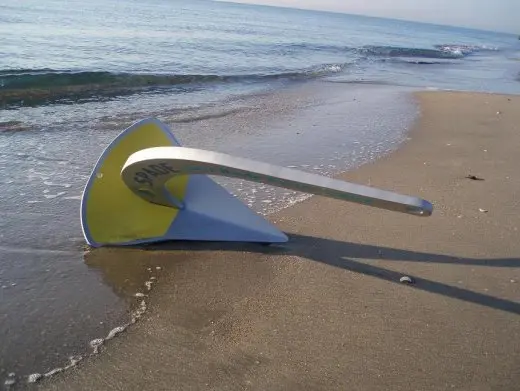
We have a a 32Kg spade anchor on our boat, we can drop it doing 3 knots over sand and it stops us dead in the water. We sleep pretty well with this out, and don't really worry about dragging. Any modern generation anchor should do the trick, Rocna anchors are very well priced, and are a great upgrade from a CQR.
Whatever you do don't waste your time with a danforth or similar for your bower, whilst they are great as a kedge anchor, they don't cope well with the wind shifts and tend to fail to reset.
Thankfully most anchorages in Baja are relatively shallow and most are also fairly simple requiring you just to drop the hook over 20ft of sand, so you can make do with around 100ft of chain, although I'd recommend bringing 150 which will give you some options if you need to anchor further out, or if the weather is really bad.